

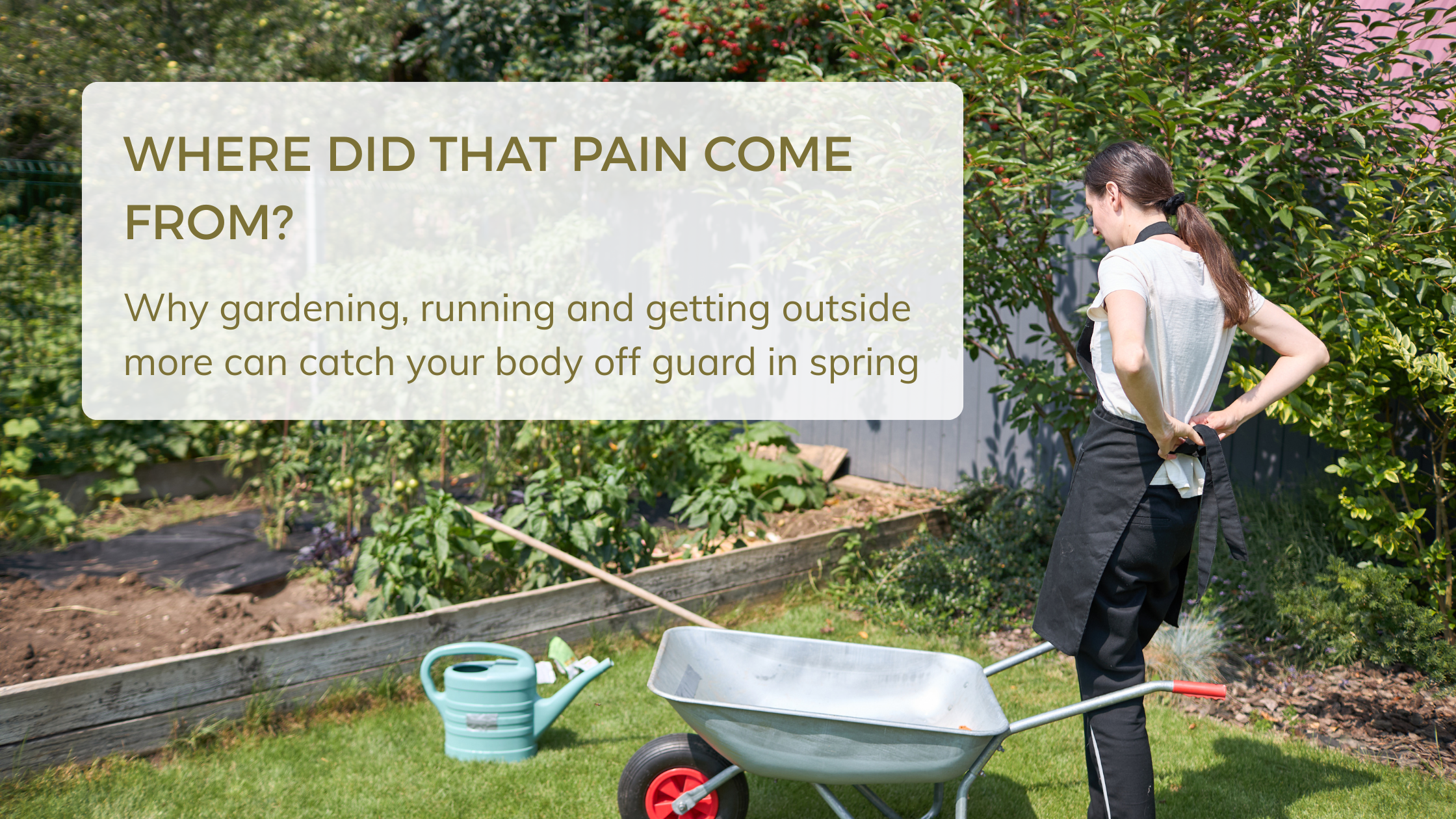
Where Did That Pain Come From?
Why gardening, running and getting outside more can catch your body off guard in spring.
Every year, without fail, April brings a very recognisable shift in clinic.
The clocks change.
The evenings brighten.
People feel better.
And suddenly they are:
back in the garden for hours
signing up for a half marathon
booking their first tennis court of the year
getting back on the climbing wall
doing longer dog walks
planning Easter hikes and active family days out
spending weekends decorating, lifting and clearing
It all feels positive.
Until somewhere between the third bag of compost, the second run of the week, or the first sunny weekend, someone says:
“I was feeling great… where has this pain suddenly come from?”
After 21 years as a physiotherapist, I can almost predict the seasonal patterns before they arrive.
And the good news is: this usually isn’t random.
It’s predictable, understandable, and very treatable. If you’re already noticing one of these spring niggles, it can help to book a physiotherapy appointment early before it becomes a bigger issue.
🌷 The Spring Injury Patterns We See Every Year
🌱 1) Gardening injuries
This is one of the biggest April spikes.
The most common things we see are:
lower back pain after digging or lifting compost
knee irritation from kneeling
neck pain after hedge trimming
shoulder pain from repetitive overhead pruning
forearm or elbow flare-ups from gripping tools
calf tweaks after lots of crouching and rising
The issue is rarely that gardening is “bad”.
It’s usually:
too much bending, twisting, kneeling and lifting in one hit
after months of not doing those exact movements.
🏃 2) Running niggles as event season begins
April is when races start appearing in the diary again:
10Ks
half marathons
trail races
charity runs
Hyrox prep
triathlon build phases
Classic issues include:
calf tightness
Achilles tendon pain
runner’s knee
shin pain
plantar fascia flare-ups
glute or hamstring grumbles
The common thread is usually:
training volume rises faster than tissue tolerance
You feel fitter, stronger and more motivated… but your tissues still need time to catch up.
🧗 3) Climbing and bouldering flare-ups
This is especially common in our climbing community.
Warmer weather, more energy, and fingers feeling stronger often means people:
board harder
climb more frequently
try steeper problems
increase session intensity
Then we start to see:
A2 pulley irritation
medial elbow pain
shoulder impingement
finger synovitis
forearm overload
upper back stiffness
The classic mistake?
Feeling stronger before the tendons have fully adapted
This is why spring climbing injuries are often the ones that:
“never quite seem to settle.”
🎾 4) Seasonal sport returns
Spring often brings people back to:
tennis
golf
Touch Rugby
cricket nets
Padel
athletics season
The usual flare-ups:
shoulders
elbows
calves
hamstrings
lower backs
side strains
This is especially common when people go from:
a relatively sedentary winter → competitive weekend intensity
🚶 5) The “we’re just walking more” trap
This one catches people out every year.
Longer evenings and nicer weather mean:
longer dog walks
family coastal walks
Dartmoor days out
Easter holiday exploring
more steps without thinking about it
Then suddenly:
heel pain
Achilles irritation
lateral hip pain
swollen knees
forefoot pain
The issue isn’t walking itself.
It’s:
the sudden jump in duration before the body is conditioned for it
🧠 Why This Happens
The reason these spring niggles appear is actually very simple:
your enthusiasm often increases faster than your tissue capacity
The daylight improves.
Your mood improves.
Motivation goes up.
But your:
tendons
calves
glutes
shoulders
lower back
knees
still need time to catch up with what you’re suddenly asking of them.
That mismatch creates the classic:
“I was absolutely fine… then suddenly I wasn’t”
moment.
✅ What To Do Instead
1) Build in stages
Avoid the classic:
zero to hero spring weekend
Instead:
build gardening time gradually
return to running volume progressively
shorten climbing sessions initially
ease back into tennis or golf
Think:
20 minutes → 40 → 60
rather than jumping straight into several hours.
2) Rotate movement patterns
Don’t spend 4 straight hours only:
digging
kneeling
gripping tools
overhead trimming
downhill running
steep board climbing
Changing positions and movement patterns helps tissues tolerate more.
3) Don’t wait until it becomes severe
Spring flare-ups often respond brilliantly when caught early.
The people who recover fastest are usually the ones who say:
“This isn’t behaving as I expected”
rather than waiting 6 weeks hoping it settles.
📍 The Good News
At Quay Kinetics Physio, we see these patterns every single spring.
Whether it’s:
gardening back pain
running calf pain
climbing elbows
shoulder pain after tennis
family walk flare-ups
…the good news is that most of it settles really well with the right advice, progressive loading, and early intervention.
📍 The Quay Climbing Centre
📍 Boulder Exe
If something has started grumbling now you’re getting out more, this is the perfect time to get it sorted before spring turns into summer.