

Mummy MOT in Exeter with Carmen
A Mummy MOT® is a one hour postnatal pelvic health assessment: a full check of your pelvic floor, tummy muscles, posture and movement, followed by a recovery plan built around what you want to get back to. Carmen Taylor offers it at Boulder Exe and Quay Climbing Centre.
The facts
What it is: a postnatal pelvic health assessment and personalised recovery programme
Who it is for: any mum, however your baby arrived and however long ago
Length: 1 hour
Price: £120 for the assessment. Follow-ups are 60 minutes, £100
Where: Boulder Exe, Tudor Street, Exeter EX4 3BR (ground floor, step-free) or Quay Climbing Centre, Haven Road, Exeter EX2 8AX (first floor, stairs only)
Referral: none needed
How to book: online, and the booking page shows Carmen's current availability
Why have one
Pregnancy and birth ask a lot of your body, and most of the attention afterwards goes to the baby. A Mummy MOT is the part that is for you. It is for lifting the pushchair into the boot without thinking about it, getting up off the floor, or running again. It is carried out by a practitioner trained in the Mummy MOT method, and it is for any mum, whatever your lifestyle or fitness goals.
Who it is for, and when to come
Most mums book at 6 to 8 weeks after the birth. We wait until at least 6 weeks after childbirth, or after urogenital surgery, so healing has started.
You do not need to have a problem to come. It is a good idea if you are leaking when you cough, laugh or exercise, have a heavy or dragging feeling, have a tummy gap that has not closed, or have back or pelvic pain. Plenty of mums come because they want to get back to running, classes or sport and would like to know their body is ready.
It is not too late, either. If you had your baby months or years ago and something still is not right, Carmen sees you too.
What happens in your hour
You start by talking: your birth, any symptoms, your day to day, what you are finding hard, and most importantly what you want to get back to doing. Then Carmen looks at how you move and how everything works together. She will assess:
Your walking and posture
How your upper back, lower back and hips move
Everyday movements such as single-leg balance, squat, lunge and deadlift
Your tummy, including any gap (diastasis recti) and your caesarean scar if you had one
How your breathing, deep core and pelvic floor work together
Your pelvic floor, from the outside and, if you choose, from the inside
If there is time and you would like to, you can start practising your rehab in the session. Afterwards you get a written summary of the findings, a plan, and a home exercise programme by email.
About the internal examination
An internal examination is a usual part of the assessment, and it is always your choice. Carmen explains what it involves and only goes ahead with your consent. You can say yes, say no, take time to think, or stop at any time. Saying no does not mean you will not be offered treatment if she thinks it will help.
If you do agree, Carmen wears gloves and uses one finger to check the pelvic floor muscles for pain and tightness, and to assess their strength, endurance, coordination and how quickly they contract and relax. It matters because not everyone needs the same exercises, and an internal check shows what your pelvic floor is actually doing rather than leaving us to guess.
It happens in a private room. Friends and family are welcome to come for support if you prefer. If you would like a chaperone, tell us when you book. If we cannot arrange one on the day, Carmen can leave the internal part for another visit.
When we would rather wait
Carmen will not do an internal examination if you have an active vaginal or urinary tract infection, bleeding that has not been explained, or a painful or infected skin condition. If any of those apply, let us know and we will rearrange. Some women prefer to book when they are not on their period, as the tissues can be more sensitive. That is entirely up to you.
Babies and buggies
Babies and children are welcome, and feeds, changes and cuddles are fine. They may use up some of your hour, and if we run out of time we may finish at a follow-up. Boulder Exe is ground floor and step-free, so a buggy can come into the room. Quay Climbing Centre is up a flight of stairs. Leave the buggy downstairs by the stairs and bring baby up in a carrier, or with something to lay them on. If you would rather bring the buggy up, we will endevour to help.
What the research says
A tummy gap is common after birth. In a study of first-time mums in Norway, about 60% had one at 6 weeks, 45% at 6 months and 33% at 12 months. The same study found no difference in reported back or pelvic pain between women with and without a gap at 12 months. So whether yours matters depends on how it behaves when you load it, which is what Carmen tests. (Sperstad et al, British Journal of Sports Medicine, 2016)
Pelvic floor training in the first year after birth can make a difference. A 2025 review of seven trials found it reduced the odds of urinary incontinence by 37% on average. (Beamish et al, British Journal of Sports Medicine, 2025)
Recovery varies from person to person, and we cannot promise an outcome. What we can do is show you what is going on and give you a plan.
Meet Carmen
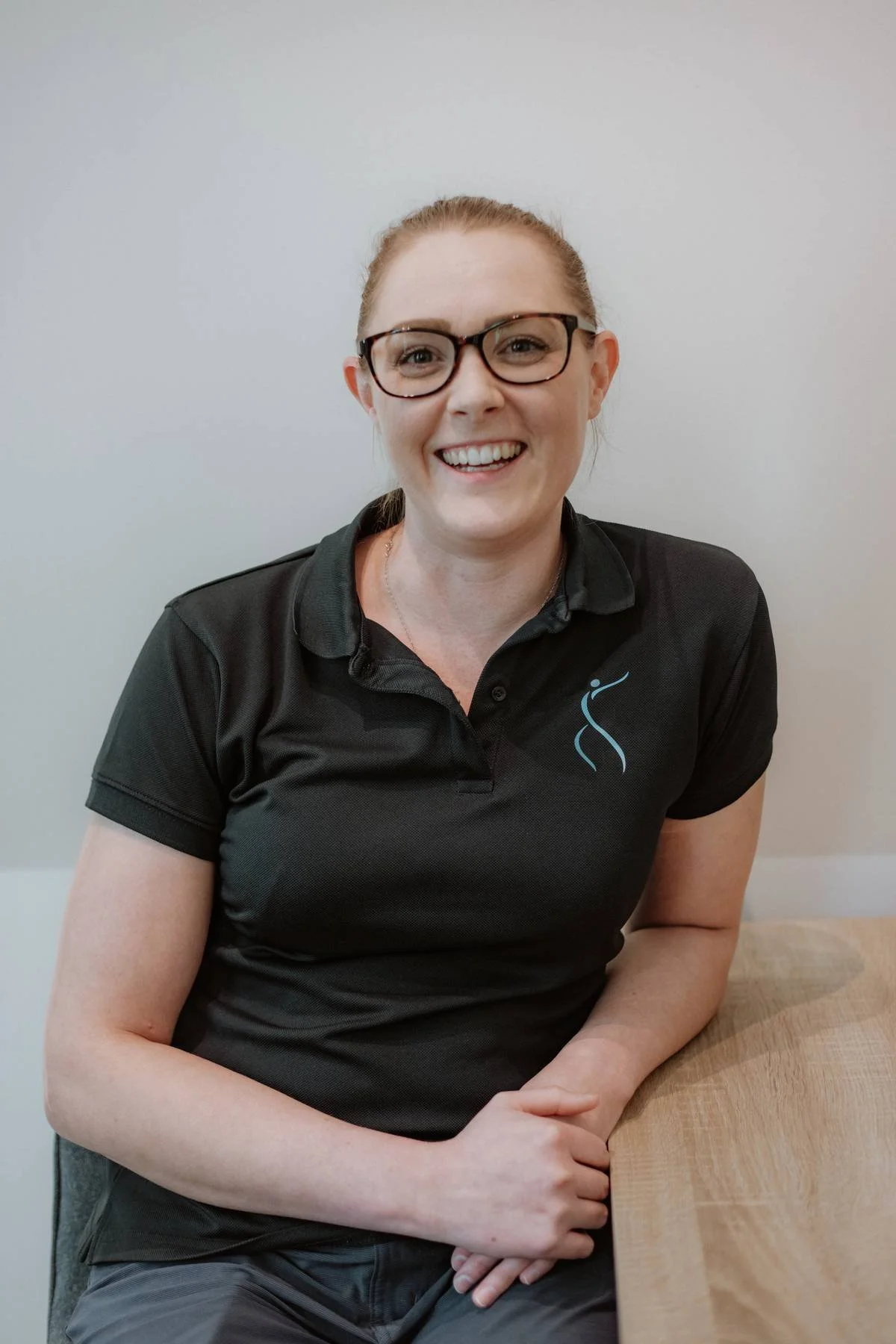
Carmen Taylor MSc MCSP is a Specialist Musculoskeletal Physiotherapist at Quay Kinetics Physio, working across both clinics. Her background covers MSK physiotherapy, persistent pain, movement confidence, and vestibular and balance rehab. She is a certified Mummy MOT® practitioner, trained in internal pelvic floor examination, and an affiliate member of Pelvic, Obstetric and Gynaecological Physiotherapy (POGP). She is also a member of the Chartered Society of Physiotherapy and registered with the HCPC.
More about the assessment: The Mummy MOT and POGP.
More answers are in the FAQs below. Questions about babies, chaperones, privacy and booking are on the Women’s Health page.
FAQs
-
Pelvic floor symptoms can follow any type of birth, so the assessment is worth having after a caesarean too. It includes your scar.
-
No. Carmen sees mums months and years after birth, particularly for a tummy gap or pelvic floor symptoms that have not gone away.
-
No. Many mums book to check how they are recovering, or to make sure they are ready to return to running, classes or sport.
-
Yes. You are in control of what happens throughout.
-
Comfortable clothes you can move in, such as leggings and a vest top, with comfortable underwear and a sports bra, because Carmen will watch how you walk, balance and squat. A top that rolls up helps her look at your tummy. If you choose the internal examination, your lower clothing comes off for that part, so something easy to remove helps. Carmen checks you are happy to go ahead before she starts.
-
Every Mummy MOT practitioner completes the same training and follows the same method, whatever their original profession. Carmen is a chartered physiotherapist, so she also brings her musculoskeletal and sports background to your recovery plan.